
Bellingham Garage Door Guide
What a Service Call Actually Covers
A look at what actually happens on a service call for Bellingham homes built 1944-2002, and how the marine cold climate here changes the diagnosis.
- Licensed & Insured
- Same-Area Service Calls
- Upfront Pricing
What Is Going On
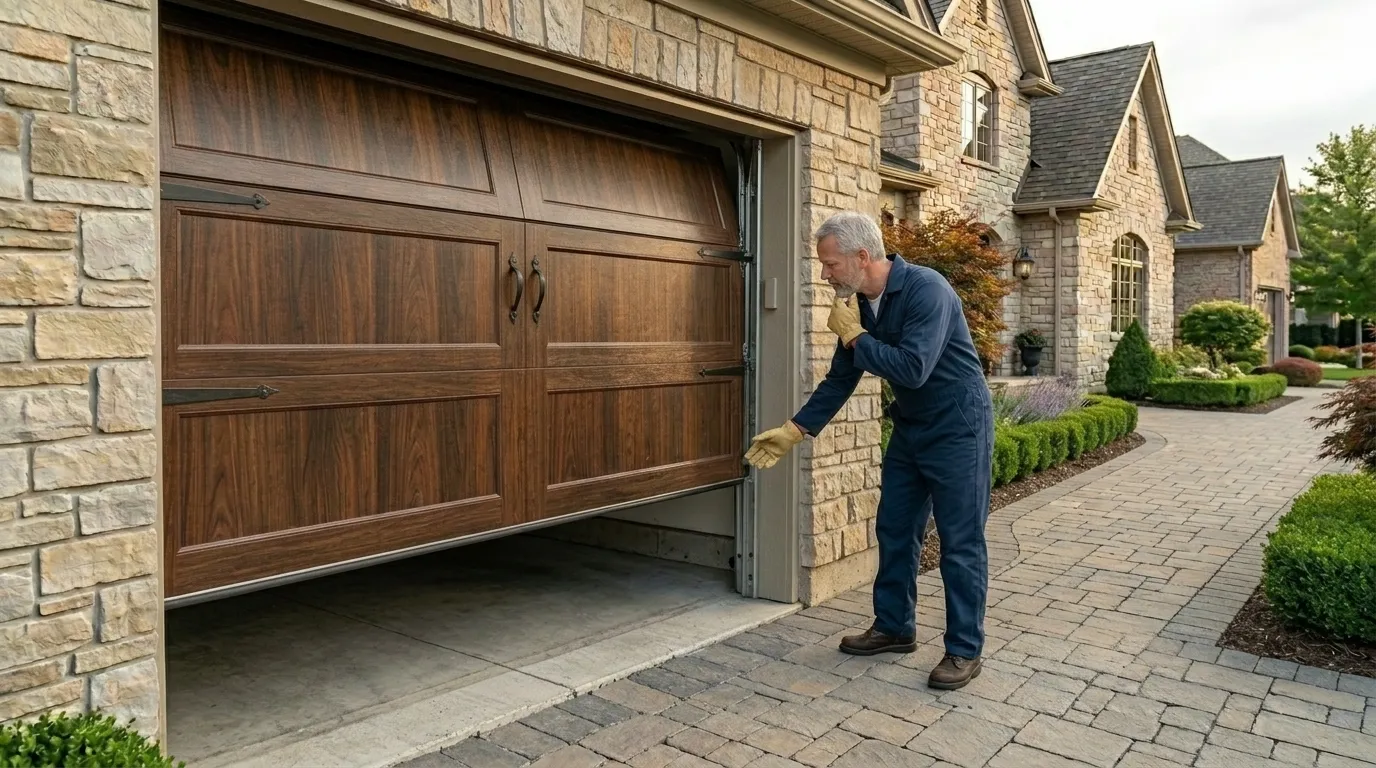
Most of the houses we get called to sit in that 1944-to-2002 build window, with the median landing around 1988. That's a long stretch, and it matters because a door installed in 1975 and a door installed in 1998 fail in completely different ways. On a service call, the first ten minutes aren't about the noise you called in about - they're about figuring out which era of hardware we're actually looking at.
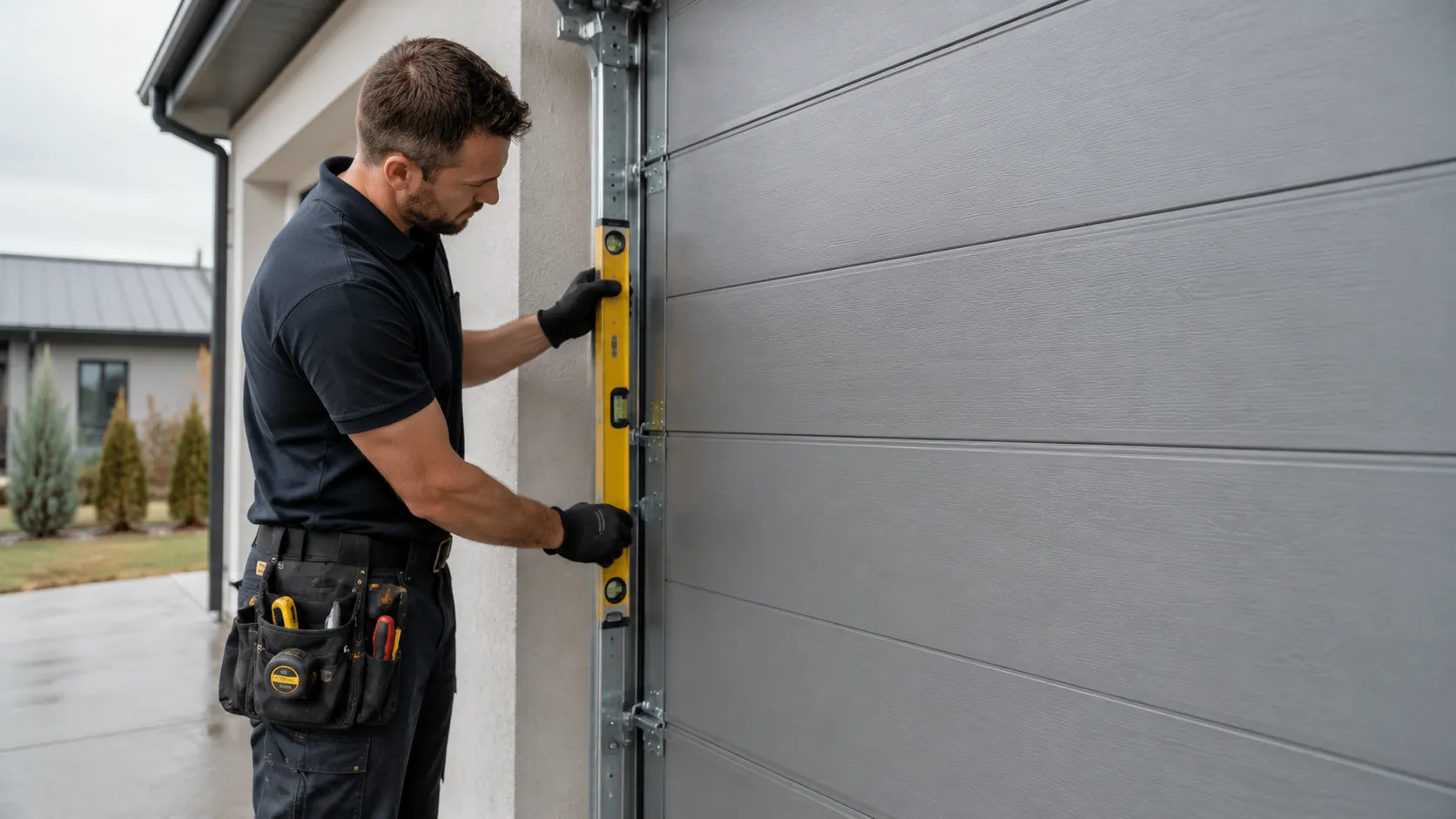
Torsion springs, extension springs, the gauge of the track, whether the opener is original or a second or third replacement. Bellingham's stock spans 17 named areas from the Lettered Streets to Cordata, and a lot of that variety is really just decade of construction wearing different shells. Once we know the era, the rest of the call is straightforward: check spring wind and cycle count, check the track alignment against the door weight it was built for, check whether the opener's force settings still match a door that's sagged or been reinforced over the years.
We don't guess based on the address. We open the panel and look. That diagnosis step is most of what you're paying for, even before a single part gets replaced.
What the Weather Here Does to It
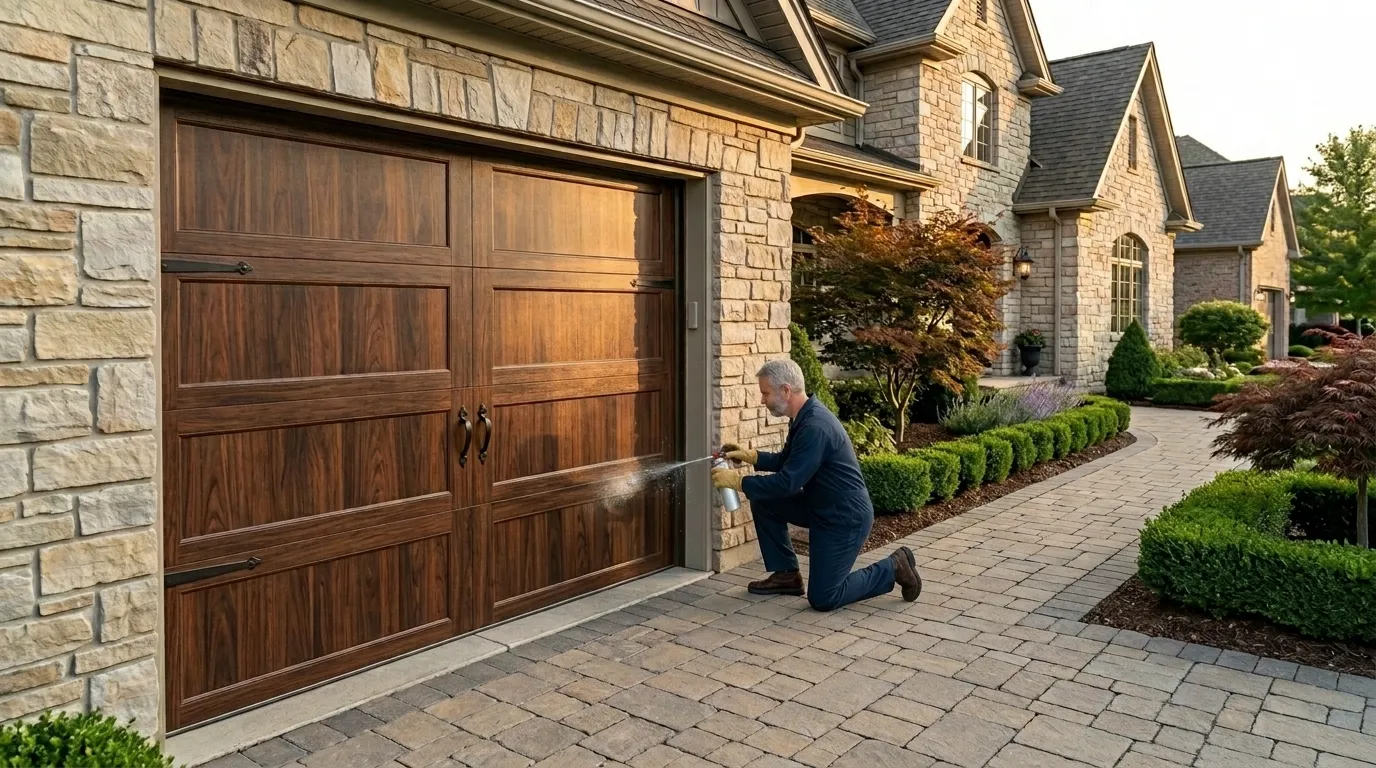
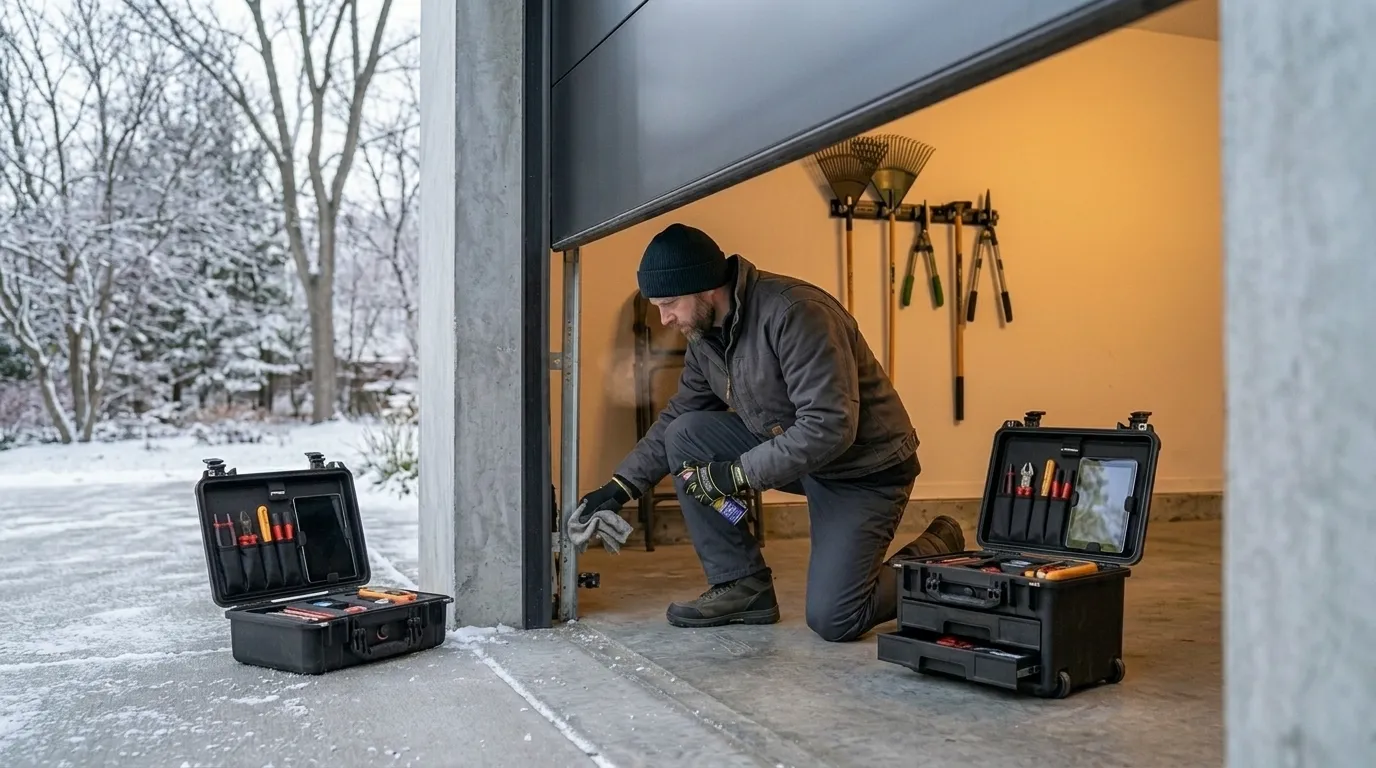
Bellingham sits in a cold-moderate band, not a harsh-winter one, but that doesn't mean the door gets a pass. The swing that matters here is damp cold, not deep freeze - steel expands and contracts less dramatically than it would somewhere with hard freeze-thaw, but moisture sitting in a track or on an unlubricated hinge doesn't need extreme cold to start rust. On a service call we're checking roller bearings and hinge pins for that early rust film, and checking whether the bottom seal is still doing its job keeping standing water off the slab track.
Steel doors from the 1980s and 90s stock that makes up most of this area's housing don't have the coatings newer doors ship with, so this is where age and climate stack on each other. A door that's fine in a dry garage two towns over can bind here simply because nobody's oiled the hinges since it went in. We're not chasing a weather event.
We're accounting for years of ordinary damp sitting on parts that were never sealed against it.
When Waiting Is Fine
Not everything on that inspection list needs action this month. A little surface rust on a hinge that still moves freely, a slightly noisy roller that isn't binding, cosmetic dents on an older panel that don't affect the door's balance - those can wait, and we'll say so on the call rather than write them up as urgent. Here's the honest limit on our side: we don't stock parts for every opener model that's twenty-plus years old, and if your unit is from the earlier end of that 1944 range, sourcing an exact match sometimes takes longer than we'd like.
In that case waiting for the part isn't optional, it's just what happens, and we'll tell you the real timeline instead of padding the visit with work that doesn't need doing yet. If the door still opens smoothly, holds its position, and the spring shows even coils with no gaps, there's no reason to force a repair before it's actually needed.
When to Call Someone
Some things don't wait, and they're the same regardless of which decade your house was built. A spring that's visibly gapped or has separated is under full tension and can let go without warning - that's not a weekend project. A door that drops instead of lowering smoothly usually means a cable has slipped or frayed.
If the opener runs but the door doesn't move, or moves and then reverses on its own, the force settings are fighting the door's actual weight, which is common once original hardware ages past what it was tuned for. Given how much of Bellingham's housing sits in that 1980s-to-90s middle of the build range, this is the failure we see most: hardware that was correctly set fifteen or twenty years ago and never rechecked since. None of that is a DIY call.
If you're hearing a bang, seeing a gap in the spring, or the door won't hold its position on its own, that's the point to stop opening it and get someone out.
How We Can Help
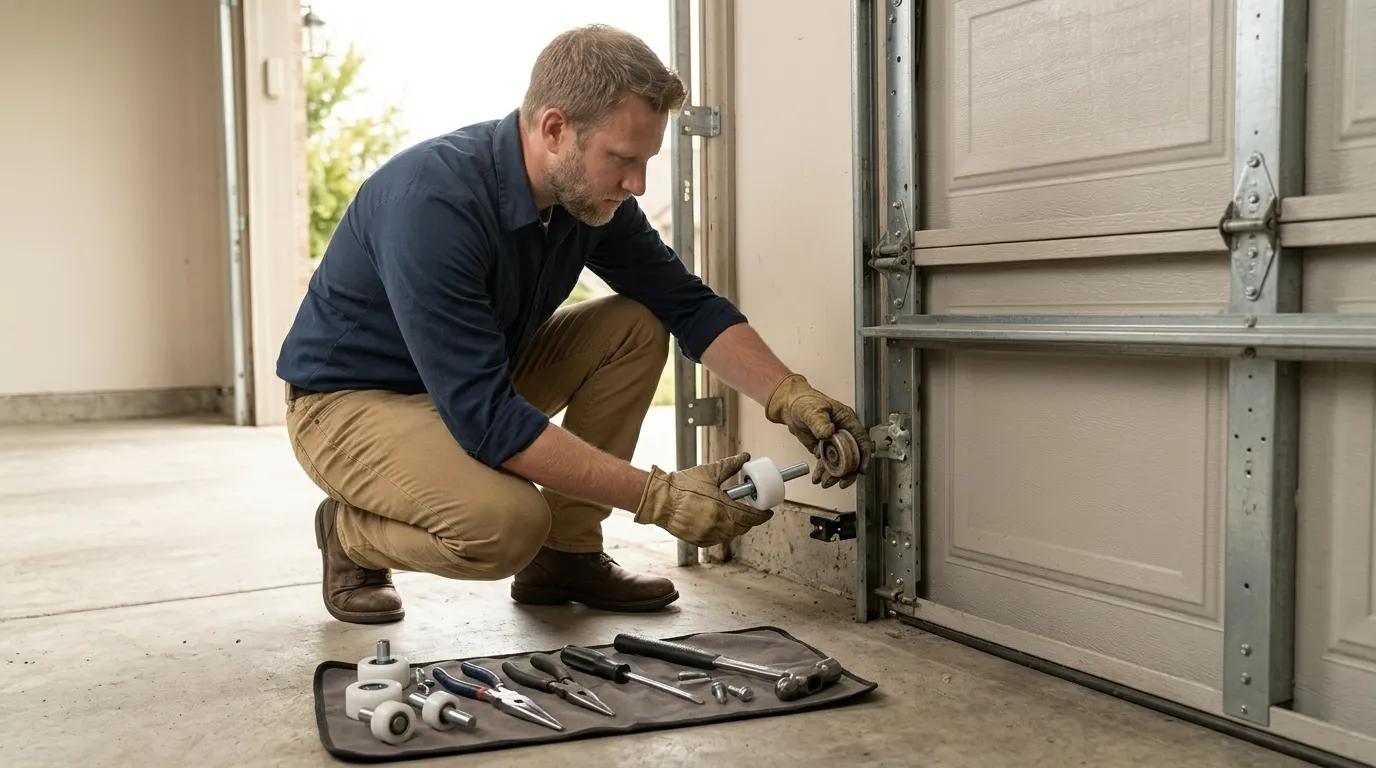
Garage Door Repair
Springs, cables, tracks, rollers, and openers fixed by a tech who explains the problem before touching anything.
Learn more →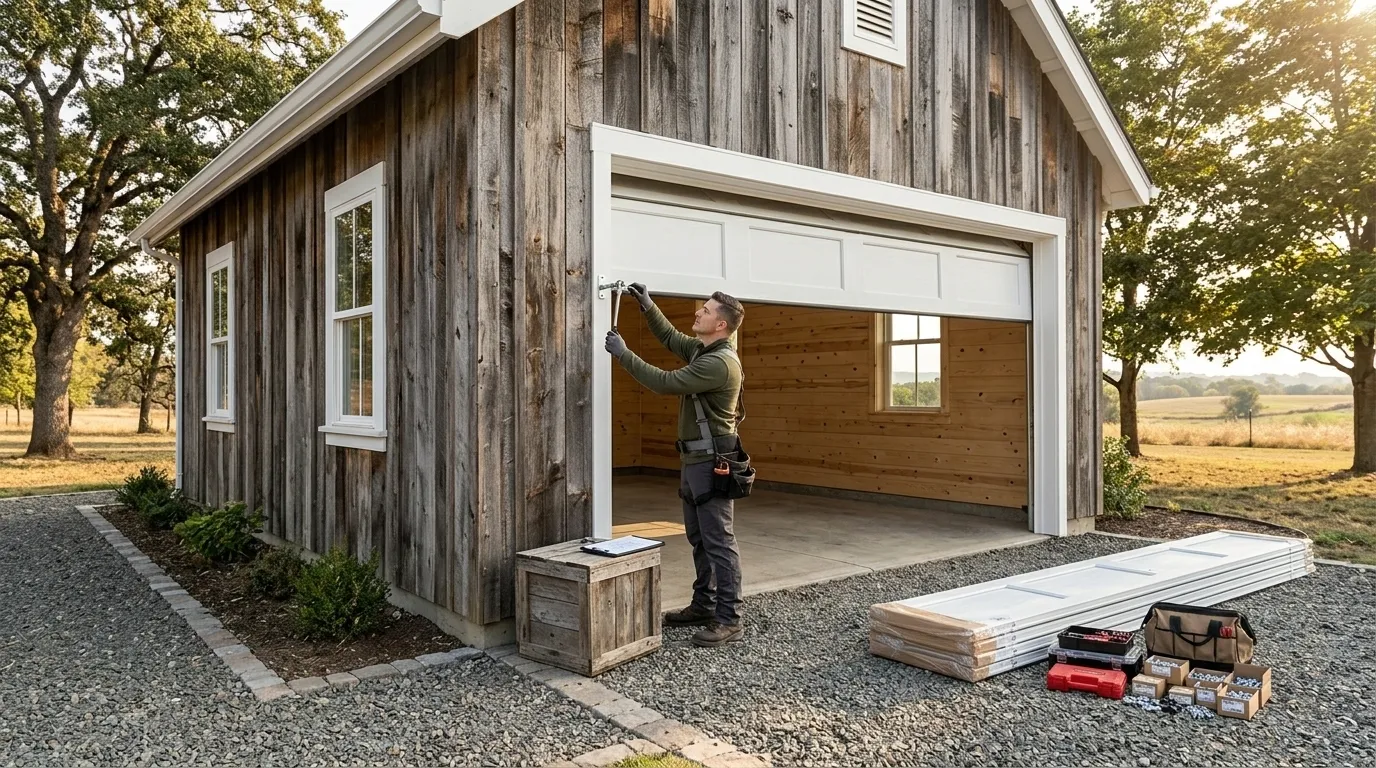
Garage Door Installation
New sectional doors sized and installed for the housing stock actually built in this area.
Learn more →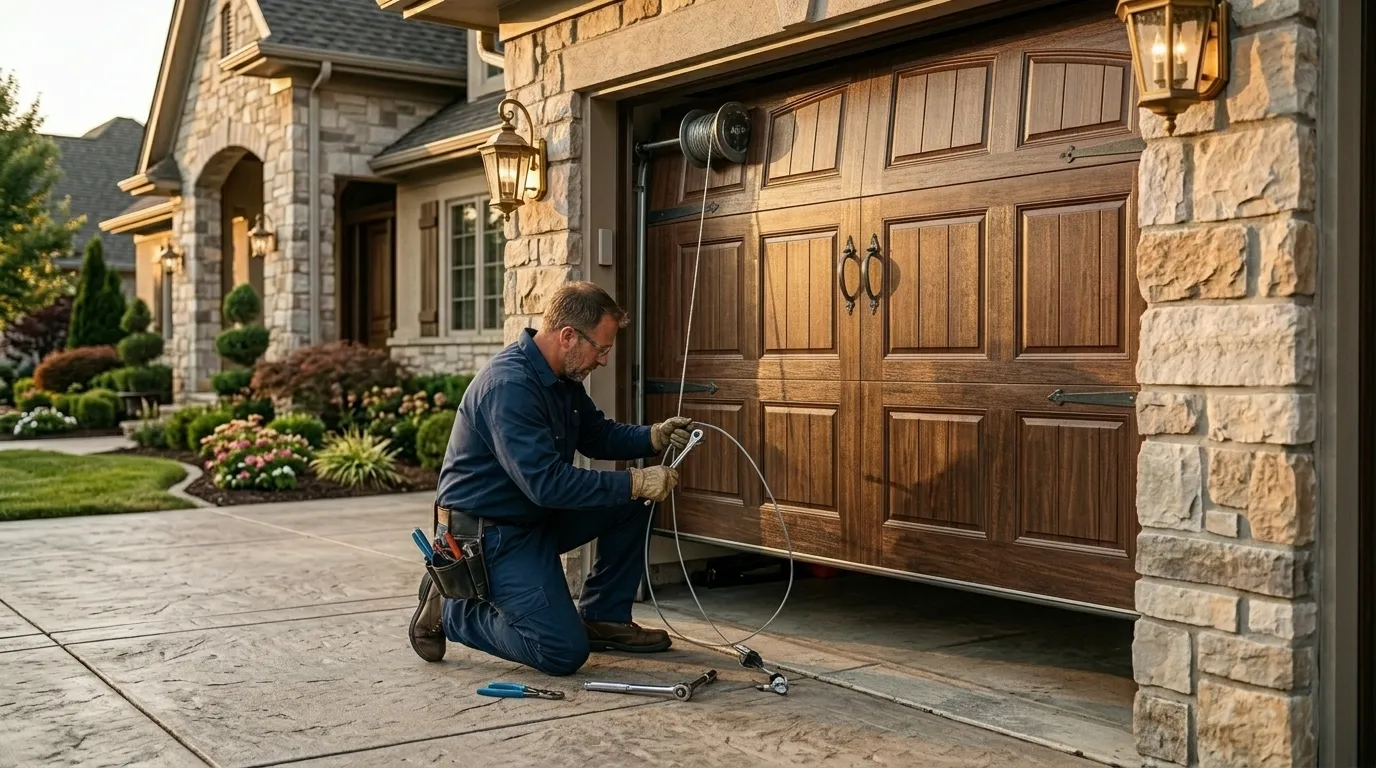
Garage Door Service
Tune-ups, lubrication, and safety checks that catch a small problem before it becomes a service call.
Learn more →Frequently Asked Questions
How do you diagnose a garage door problem without knowing my house's age ahead of time?
We ask, but we also check on site - the spring type, track gauge, and opener generation tell us the era fast. Since most Bellingham homes fall between 1944 and 2002 with a lot clustered around the late 80s, that range gives us a strong starting point before we even open the panel.
Does Bellingham's climate mean I need to lubricate my door more often?
The cold-moderate band here isn't extreme, but the damp does more work than the cold does. Hinges and rollers on older steel doors pick up surface rust faster in persistent damp than in a dry cold climate, so a yearly check on hardware that hasn't been touched in a while is worth doing.
My opener is original to the house. Can you get parts for it?
Sometimes, and sometimes not - it depends on the model and how old it is. Homes on the earlier end of the 1944-2002 range can have openers we can't source an exact replacement part for anymore. We'll tell you straight if that's the case rather than guess at a fix.
Is a noisy door always a spring problem?
No. Noise can come from dry rollers, a track that's shifted slightly, or hinge wear, all of which are common on the 1980s-90s stock that makes up most of the area. A visible gap in the spring coils is the one sign that means stop using the door and call.
Have a Door That Needs a Second Opinion?
Call and describe what it is doing - we will tell you what it likely is.